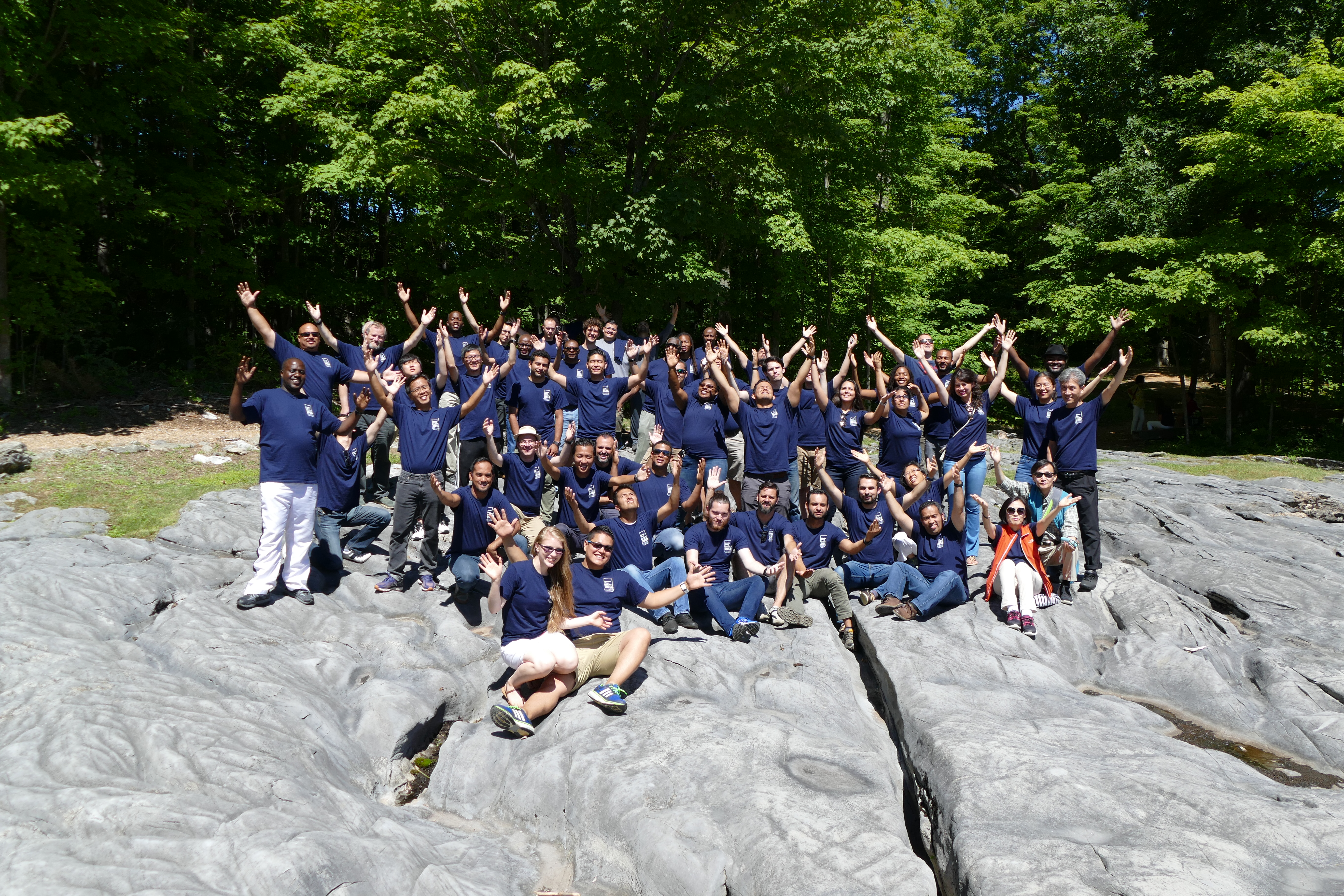
Unloading a tractor-trailer full of boxes on a hot and steamy August day is not ideal, but there was anticipation in the air as several staff members and student workers from the Center for Adventist Research and James White Library unloaded the vast yellow Andrews University trailer filled with roughly 30,000 pounds of materials. This included books, artifacts, tracts, periodicals and other resources from Atlantic Union College’s (AUC) Heritage Room and other locations on its campus that were once a part of their historical materials collection.
Also included were selected administrative and organizational records, documenting the most recent 20 years of the College. AUC was the oldest Seventh-day Adventist educational institution operating on the same site where it was founded in 1882.
Judymae Richards, administrative assistant at the Center for Adventist Research, said, “I was excited to be able to help. It turned out to be a wonderful time of teamwork and fellowship—one of the first times we were able to work together in person in months. We ladies carried items and stacked boxes all day. It was truly a team effort. We are very grateful that the AUC items are finding a home here at Andrews University. They represent a great faith heritage.”
The historical materials made the lengthy 18-hour trip from the AUC campus in South Lancaster, Massachusetts, to Andrews University over two days, stopping at the Historic Adventist Village in Battle Creek, Michigan, to drop off items from AUC going to Adventist Heritage Ministries. Securing the Atlantic Union College materials was an extended process that encompassed several years. Since 2011, when Atlantic Union College was forced to close its doors for a variety of reasons, the College and the Atlantic Union Conference leadership made several efforts to find a way to reopen the College and keep it functioning. After that was no longer possible, the leaders of the Atlantic Union Conference were looking into the possibility of establishing a museum that would feature Adventist artifacts and other historical resources held by the College. Seventh-day Adventism began in New England and it seemed appropriate to continue to maintain the historical resources in that part of the country.
However, it soon became clear that the cost and logistics to accomplish that plan would be too high. Merlin Burt, then director of the Center for Adventist Research, together with James Nix, the now-retired director of the Ellen G. White Estate, and its vice-director Tim Poirier, along with Markus Kutzschbach, executive director of Adventist Heritage Ministries, assisted the Atlantic Union Conference officers, and through them the executive committee, in assessing how best to proceed with preserving the valuable Adventist historical artifacts, books and other materials. The decision was made to first find places within the Atlantic Union Conference for some of the artifacts and materials. Next, many of the more significant artifacts went to the Ellen G. White Estate in Silver Spring, Maryland, and to the sites of Adventist Heritage Ministries. The bulk of the historical and research materials came to the Center for Adventist Research at Andrews University.
The Atlantic Union Conference officers, executive committee and constituency deserve a multitude of recognition and gratitude for their careful attention to preserving these priceless and important materials for posterity. This will permit telling stories about the mighty acts of God and the working of the Holy Spirit in the lives of early Seventh-day Adventists and the educational ministry of the Seventh-day Adventist Church. It further allows the opportunity to actually show objects associated with those stories. As the saying goes, “a picture [or an object in this case] is worth a thousand words.” Particular appreciation is due to Elias Zabala, treasurer of the Union, and Barbara Fuller, manager of the Atlantic Union College campus. They have shown great responsibility in preserving the materials during the uncertain years since the closing of the school. It should be noted that the historical materials entrusted to the Center for Adventist Research and other entities are for the purpose of continuing the memory, legacy and story of Atlantic Union College. Thousands of students attended AUC over the years, and many of the students went on to make significant contributions to the mission of the Seventh-day Adventist Church and bless the world in so many ways.
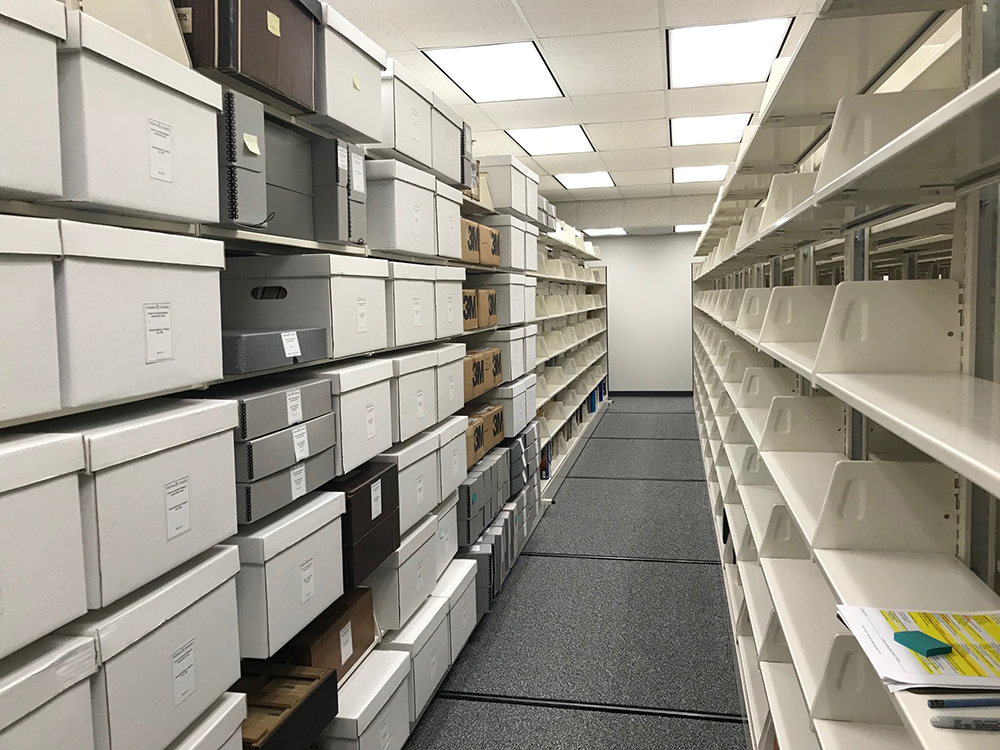
There are multiple diverse objects that will be preserved by the Center for Adventist Research—original communion glasses from the church at Washington, New Hampshire, where the Sabbath was first embraced in the spring of 1844, and materials from Adventist pioneers like James White, Stephen N. Haskell, Uriah Smith and F.C. Gilbert. Other materials include the Ottilie Stafford poetry/literature collection, records from the former New England Sanitarium, paintings, class banners, chairs from the AUC Board Room, and administrative records documenting the last years of the college. Also, the periodical collection from the Heritage Room of the AUC library is particularly rich and will expand the resources available through both the Center for Adventist Research and the Adventist Digital Library.
“Moving the AUC collection to Andrews University was bittersweet for me,” said Tamara Karr, collections associate at the Center for Adventist Research. “I grew up in New England and most of my family attended Atlantic Union College. AUC’s closing was very sad and moving items that represented its history made the closing final. However, knowing that the collection is here at Andrews made me happy. I know it will be preserved and shared.”
When the Atlantic Union College resources are added to the Center’s collection, they will be identified in the James White Library catalog as coming from AUC. Exhibited items will also be shown as coming from AUC. Additionally, when material that came from AUC is digitized and placed in the Adventist Digital Library, AUC will be identified as the source of the material. In that way, these items and materials will continue the legacy of the College. After the inventory work is complete, the Center for Adventist Research will share unneeded materials with other Adventist institutions to further preserve the legacy of Atlantic Union College.